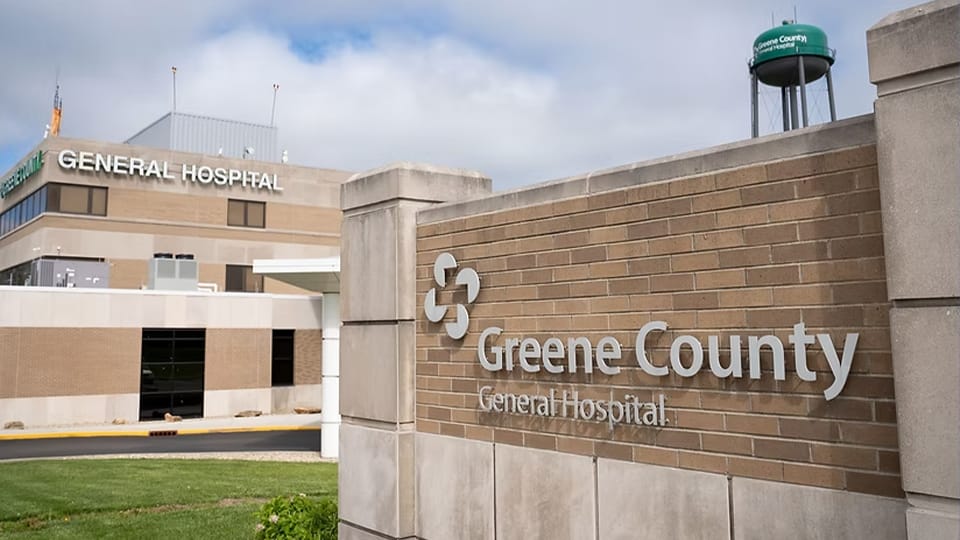

Linton, Ind. — Greene County General Hospital has taken the unusual step of issuing formal breach-of-contract notices to Anthem, saying the insurer underpaid hundreds of commercial claims by processing them under the wrong framework and has been slow to fix the problem.
The first notice went out April 14, 2026. A second followed on May 14 after hospital leaders said the issues remained unresolved and additional problems had surfaced. CEO Brenda Reetz has described the identified shortfall on one batch of claims as approaching $1 million — roughly a week of operating cash for the critical-access hospital — with the possibility of more once other claim groups are fully reviewed.
According to the hospital, Anthem acknowledged that many in-network commercial claims were adjudicated as if they were out-of-network. That reduced reimbursement to GCGH and, in some cases, increased the amounts patients were asked to pay through deductibles and co-pays. Reetz has said Anthem identified at least one processing error internally in early January but did not promptly disclose it to the hospital.
“A rural hospital should not have to spend months uncovering payment problems that a payer identified internally and did not promptly disclose,” Reetz stated when the second notice was issued. The hospital is asking Anthem to identify the full scope of affected claims, reprocess and pay them correctly, correct any improper patient responsibility, and resolve broader contractual concerns.
Anthem has said it is addressing the issues and expressed disappointment that the hospital chose to issue formal notices while discussions were underway.
A Longstanding Local Institution Under Pressure
Greene County General Hospital traces its roots to 1912, when the Freeman family donated a home in Linton that became the community’s first hospital. It became a county facility in the late 1920s and moved into its current building on Lone Tree Road in 1974. Designated a Critical Access Hospital in 2003, it remains the primary acute-care provider for Greene County residents and draws patients from neighboring rural counties for emergency, outpatient, and general medical services.
Like many small rural hospitals, GCGH has faced repeated operating losses in recent years. Its 2024 operating loss reached approximately $2.8 million. Cash reserves have at times been thin. In December 2025 the board voted to end obstetric deliveries effective Jan. 31, 2026, after a five-year average of only about 73 births produced substantial losses. Prenatal, postpartum, and gynecological care continue through the hospital’s clinics, while deliveries now occur at larger neighboring facilities.
Hospital leaders have pointed to underpayments and delayed reimbursements from commercial insurers as a significant contributor to the financial strain, alongside low patient volumes in some service lines, rising costs, and Medicaid reimbursement challenges common across rural Indiana.
The Anthem dispute does not appear to have moved into formal court filings as of mid-August 2026. It remains a contractual matter. For a county-owned critical-access hospital that serves as the main safety-net provider for Greene County and surrounding communities, however, the difference between timely, accurate payment and prolonged underpayment is measured in the ability to keep essential services open.
Greene County General Hospital continues to operate emergency, medical-surgical, swing-bed, imaging, and clinic services while the payment issues are sorted out.
No thoughts yet — be the first.